
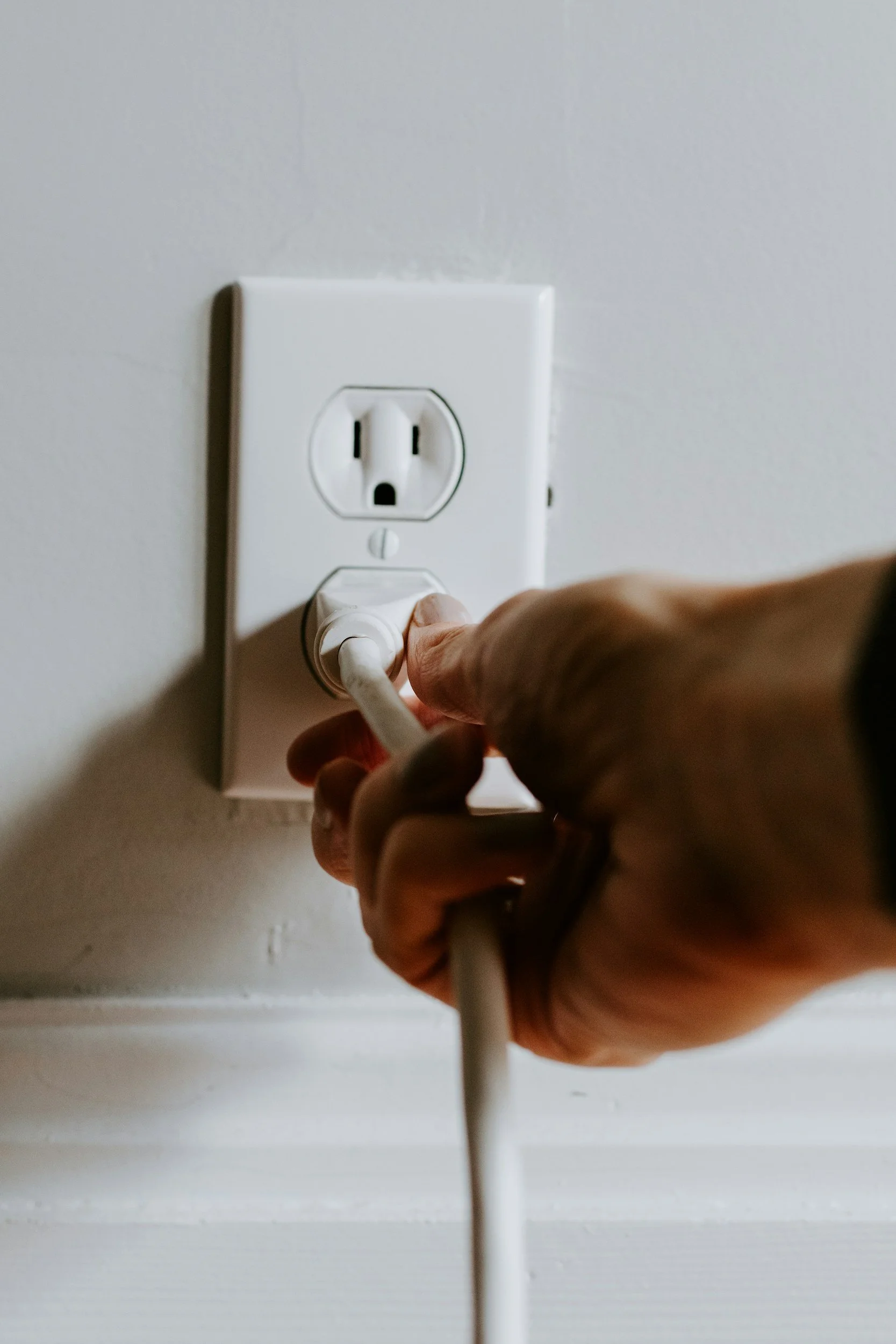
Outlets, Switches & Everyday Electrical Safety Services
CurrentMax Electric delivers code-compliant outlet, switch, and home safety device installations for homeowners throughout Wake County and beyond. Our licensed residential electricians upgrade aging devices to modern GFCI/AFCI receptacles, integrate smart dimmers and USB-A/C ports, and install interconnected smoke/CO detection systems to ensure maximum fire and shock protection.
Service Capabilities & Equipment
We install commercial-grade and residential devices engineered for durability, clean aesthetics, and long-term fire prevention.
Tamper-Resistant & Specialty Receptacles: 15A and 20A TR outlets (Leviton Decora, Lutron Claro), high-output 30W–65W USB-A/USB-C Power Delivery ports, and flush-mount motorized pop-up receptacles (Hubbell, Lew Electric) for kitchen islands and concrete floors.
Shock & Arc Fault Protection: Dual-Function AFCI/GFCI breakers and dead-front devices manufactured by Square D (QO and Homeline), Eaton (Cutler-Hammer CH/BR), and Siemens.
Lighting Controls & Automation: Smart dimmers, 3-way/4-way switch configurations, motion vacancy sensors, and whole-home ecosystems like Lutron Caséta, Lutron Maestro, and Leviton Decora Smart.
Interconnected Smoke & Carbon Monoxide Alarms: Hardwired 120V systems with sealed 10-year lithium battery backups, including Kidde, First Alert, and Google Nest Protect.
Local Permitting & NEC Code Compliance
100% Permitted & Inspected Work — Protecting Your Home's Warranty & Insurance
Every safety installation strictly satisfies the latest National Electrical Code (NEC) mandates and local municipality amendments:
-
Requires GFCI protection on all 125V through 250V receptacles in kitchens, bathrooms, laundry areas, unfinished basements, garages, outdoors, and within 6 feet of any sink or water source.
-
Mandates AFCI protection for all branch circuits supplying 120V outlets, switches, and devices in family rooms, dining rooms, living rooms, bedrooms, sunrooms, and hallways to prevent electrical arc fires.
-
Dictates built-in internal safety shutters on all 15A and 20A receptacles in residential dwellings to stop children from inserting foreign objects.
-
Enforces modern island worktop outlet guidelines, eliminating below-counterdrop hazards in favor of approved pop-up countertop assemblies.
-
Requires interconnected smoke alarms inside every bedroom, immediately outside each sleeping quarter, and on every story, accompanied by carbon monoxide detection outside bedroom clusters.
Transparent Cost Factors: What Shapes Your Estimate
While standard device swaps carry straightforward flat rates, project costs vary based on these site-specific conditions:
Existing Neutral Wiring: Homes built prior to the 1980s often lack a dedicated neutral wire inside switch boxes, requiring specialized smart switches (like Lutron Caséta No-Neutral models) or running new Romex from the panel.
Grounding Integrity: Replacing ungrounded 2-prong outlets requires either pulling a true equipment grounding conductor back to the panel or retrofitting dedicated GFCI circuit protection labeled "No Equipment Ground."
Drywall Access vs. Finished Fishing: Installing hardwired smoke detector interlinks across finished ceilings or adding island pop-ups without crawlspace access involves intricate wire-fishing techniques or precision sheetrock cuts.
Panel Capacity & Breaker Compatibility: Upgrading older circuit breakers to dual-function AFCI/GFCI breakers depends on brand availability, panel busbar health, and physical panel space.
Step-by-Step Installation Process
Site Assessment & Circuit Load Verification
Load calculation performed before any quote is finalized.
We map your existing branch circuits, test for proper grounding and neutral connections, and measure total circuit draw to ensure new devices operate within safe 80% continuous-load limits.
Permit Acquisition & Utility Coordination
Handling all regulatory paperwork
When work extends beyond basic device maintenance—such as running new dedicated safety lines or altering circuit layouts—we pull all required local municipal building permits on your behalf.
Clean, Precision Installation
The correct power to power for the job.
Our licensed electricians install your chosen switches, GFCI/AFCI units, pop-up floor boxes, or hardwired alarms using clean fishing techniques, torque-calibrated terminal screws, and heavy-duty box enclosures.
Code Inspection, Tripping Tests & Clean-Up
Final sign-off and safety audit
We verify mechanical operations, trigger manual GFCI/AFCI fault simulations using specialized circuit analyzers, test interconnectivity across all smoke alarms, coordinate city sign-offs, and leave your living space clean.
Frequently Asked Questions
-
AFCI breakers detect the signature wave pattern of dangerous sparking and arcing. However, older vacuum cleaners, treadmills, or motorized tools with worn brushes can generate harmless internal sparking that trips overly sensitive or older AFCI breakers. Our electricians inspect the circuit to isolate true wiring hazards from nuisance tripping, replacing worn breakers with updated dual-function hardware when appropriate.
-
Yes, under NEC 406.4(D)(2). If pulling a fresh ground wire to the panel is cost-prohibitive, we can install a GFCI receptacle at the beginning of the circuit (or an AFCI/GFCI breaker in the panel). This provides shock protection down the entire branch. We mark these receptacles with "GFCI Protected" and "No Equipment Ground" stickers to maintain full code compliance.
-
Yes. Modern building codes require hardwired or wireless interconnections so that when one sensor detects smoke or CO, every alarm throughout the house sounds simultaneously. If your home currently has independent battery-powered units, we install interconnected hardwired units or code-approved wireless-mesh alarms without tearing open your walls.
-
Building codes update every three years to incorporate real-world safety data. While grandfathered homes aren't always forced to remodel immediately, modifying existing circuits, selling a property, or undergoing a remodel requires bringing receptacles up to modern NEC 210.8 standards to prevent severe electrocution hazards near sinks and countertops.